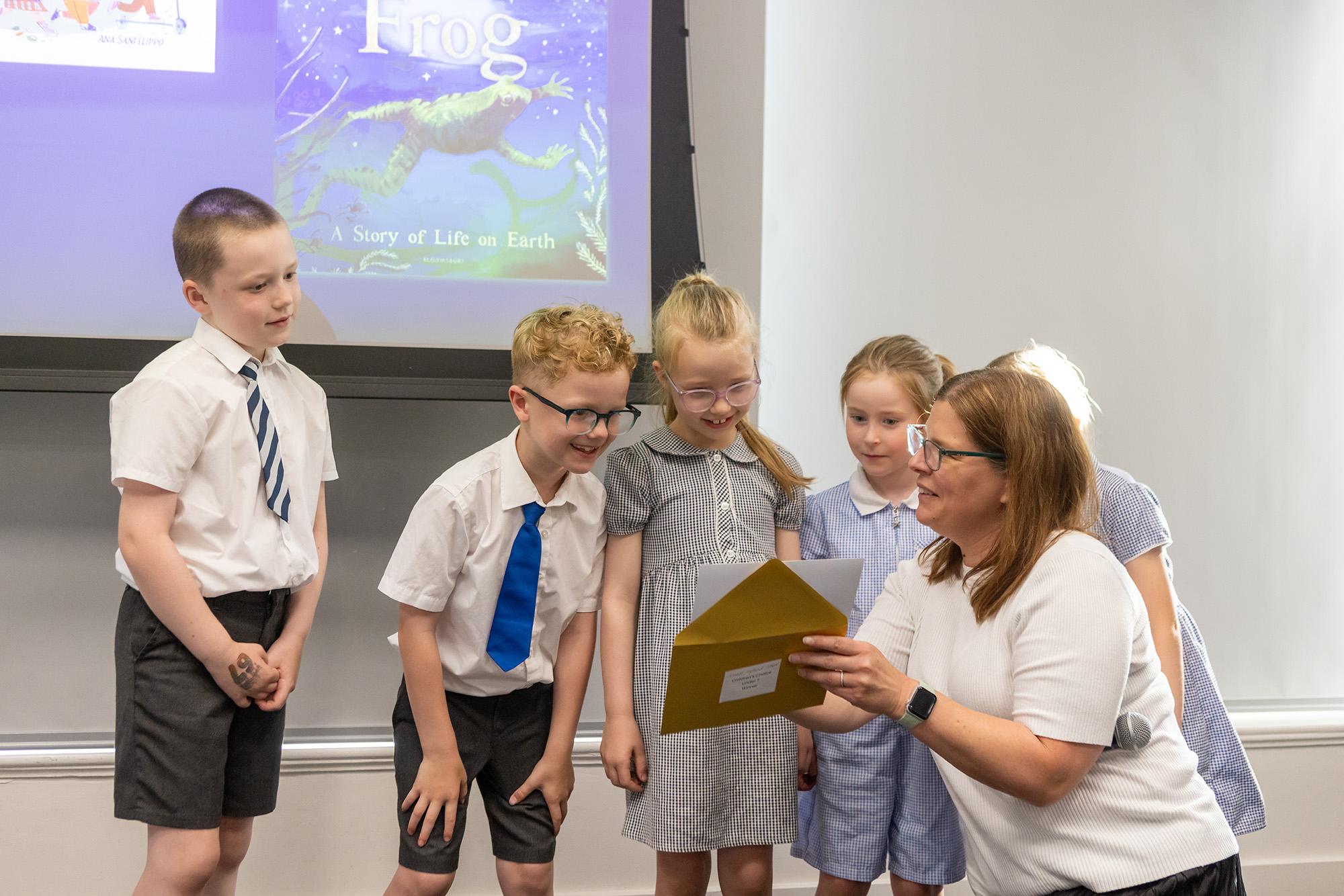
We had such a wonderful time at the Information Book Award ceremony last week, with Tamara Macfarlane, author, bookseller and founder of Moon Lane, bringing her wit, insight and incredible knowledge of children's books to the event. Tamara gave a moving opening address, touching on the politics of information books and the power and responsibility of publishers and school librarians. We are really pleased to share an edited version of Tamara's speech with you here:
The Information Book Awards exist to celebrate books packed with facts so astonishing that children are physically incapable of keeping them to themselves. You can hear them at the dinner table, cornering relatives, demanding to know whether anyone is aware that wombats produce cube-shaped droppings, and that this is – apparently, scientifically, genuinely – so that the cubes do not roll away. The dinner table falls silent. Nobody knows what to do with this information. The child is triumphant.
And then there are those equally wonderful non-fiction books that answer a different kind of question, possibly the kind of question that a child may not want, or be able, to ask out loud. Maybe it is about their body, or what is happening in their family, or in the world. Maybe it is about why their brain works differently from everyone else’s. Maybe they have seen something on a screen and do not know whether it is true, or dangerous, or something that is happening only to them. Or perhaps they just want to know if that was a Yeti behind the oak tree in Forest School yesterday.
The child who has just discovered cube-shaped wombat poo and the child who is afraid to ask their question out loud are, in the end, asking the same thing: what is this world, and how does it work? Both deserve an honest answer. Both, ideally, deserve to have a good time finding out.
What they find, and the voice of who put it there, whose innate values it carries, what is included and what is left out, is what the Information Book Award explores and celebrates.
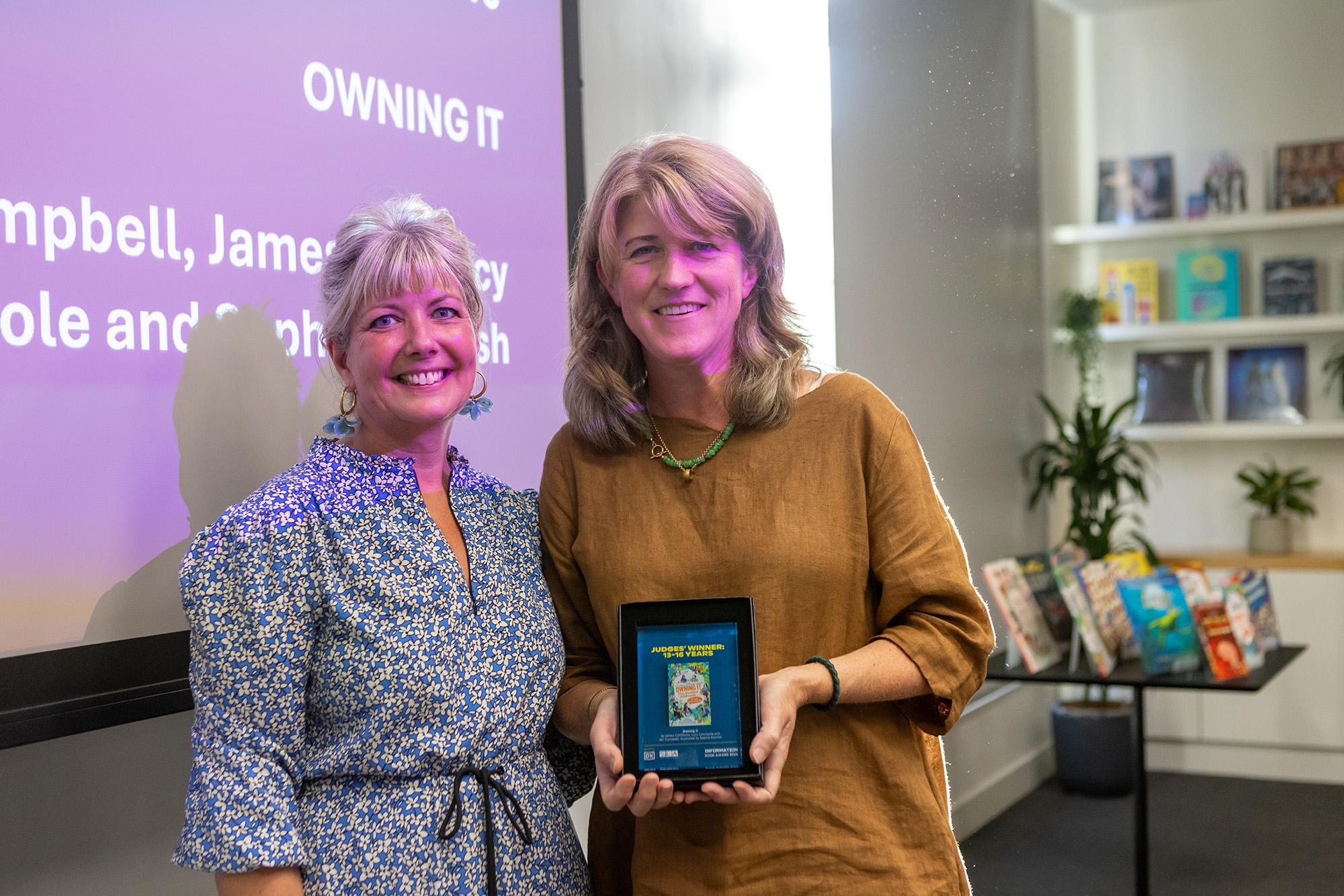
Tamara Macfarlane with Leah Thaxton, Children's Publisher at Faber
I come to this with a particular inheritance. My father, Dr Aidan Macfarlane, spent his career as a paediatrician doing one thing above all others: getting information to young people who needed it. Not diluted. Not tidied up for adult comfort. The actual truth, delivered with wit and without condescension.
In 1987, he wrote The Diary of a Teenage Health Freak – a book that smuggled health education inside something that felt like a novel, a joke, a secret passed under the desk. Teenagers who would never have picked up a leaflet about puberty or mental health were reading it, sharing it, hiding it from parents who would have approved of it entirely.
He also did something else. In the 1980s he ran a pilot in which he gave parents their children’s health records to hold themselves. The red book, as it became known. Until then those records sat in filing cabinets, gatekept by professionals. His argument was simple: parents know their children best. The information should be in their hands. Over 90 per cent of GPs in the pilot agreed, and it is now simply how things are done.
I want to hold on to that image, of information moving from behind closed doors into the hands of the people who need it, because I think it is exactly what these awards are about. Who holds the knowledge? Who decides what children need to know? And who do we trust to be the bridge?
Non-fiction for children has always been political. Not in the party-political sense, but in the deeper sense that every book is an argument about what the world is, and what young people are permitted to understand about it. Every book that tells a child about the climate crisis is making a claim. Every book that tells a true story about migration, poverty, or the experience of a body that does not conform to expectation, is making a claim: this is real. This happened. You are allowed to know.
And even the book about poo is making a claim. The claim is: bodies are interesting. Science is for everyone. You are allowed to find this funny and fascinating, and those two things are not in conflict. None of it is neutral. All of it is, in the most precise sense of the word, an act of power. Which means the question of who commissions those books, who publishes them, who stocks them, who buys them for schools and libraries, is an act of power too.
As we all know, it is not just in America where books about the reality of so many lives in our wonderfully diverse country are being threatened and withdrawn from school libraries. Books that tell a different version of the truth about history – one where women, or people of colour, held power and influence, possibly – are being described as inappropriate, divisive, or too much. Too much for whom? Not for the children who are living those realities. Not for the children who need, perhaps desperately, to see their own experience reflected back at them and told that it is real, and they are not alone.
The publishing industry has a responsibility here. Courage costs something. Commissioning books that will be challenged or banned costs something. I think we need to be clear-eyed about that and ask ourselves whether we are paying the price.
Tonight we are not just here to celebrate the authors, the illustrators, and the publishers, remarkable as they all are. We are also here to celebrate the school librarians. A school librarian is the adult in a child’s life whose job is not to assess them, not to discipline them, not to prepare them for an examination. They are simply there, with the books, with the best possible agenda: to help a child find what they need.
They know which child is going through something. They know who comes in at lunchtime because it is safer than the playground. They know who picks up a particular kind of book and puts it down again quickly, hoping no one noticed. They also know which child just needs to be handed something completely ridiculous about rhinos and left to get on with it.
A school librarian who puts the right book in the right child’s hands at the right moment is doing something no algorithm can replicate, no curriculum can mandate, no government policy can engineer. When school library budgets are cut – and they are cut, routinely, quietly, as though libraries were a luxury rather than an infrastructure – it is that relationship that is lost. Not a room with some books in it, but the human judgement. The relationship. The knowledge of who needs what.
If we are serious about information reaching all children, the school librarian is not a nice-to-have. They are the delivery system. They are the point.
Our driving mission across all of Moon Lane has been to address inequity in children’s books: inequity of access, representation, and roles in the publishing industry, so that every child has access to books that enable them to feel seen, reflected, respected, and valued. None of that reaches a child without the people in this room. Everyone here is also the key to that access.
Let me come back to where I began. The child with the question they are afraid to ask out loud. What they need is simple. An answer that tells a version of truth that holds the child at its heart, written by someone who cared, on a shelf that can be reached, that someone who knows them thought to stock, and an adult who can say, quietly, without fuss: “Here. This one. I thought you might need this.” Or, just as likely: “Here. This one. I thought it might make you laugh.”
In an age of algorithmic answers, taking responsibility for the question is a radical act. In an age when what children are allowed to know is being fought over by forces that do not have children’s interests at heart, school librarians are not peripheral. That chain, from author to publisher to library to librarian to child, is what the Information Book Awards celebrate. Every link in that chain matters. Every link in it is, in the current climate, under pressure. You are the very point.
Tamara Macfarlane's latest book, Cryptids will publish with DK on 6 August 2026
Read more about this year's ceremony and the winners of the Information Book Award.
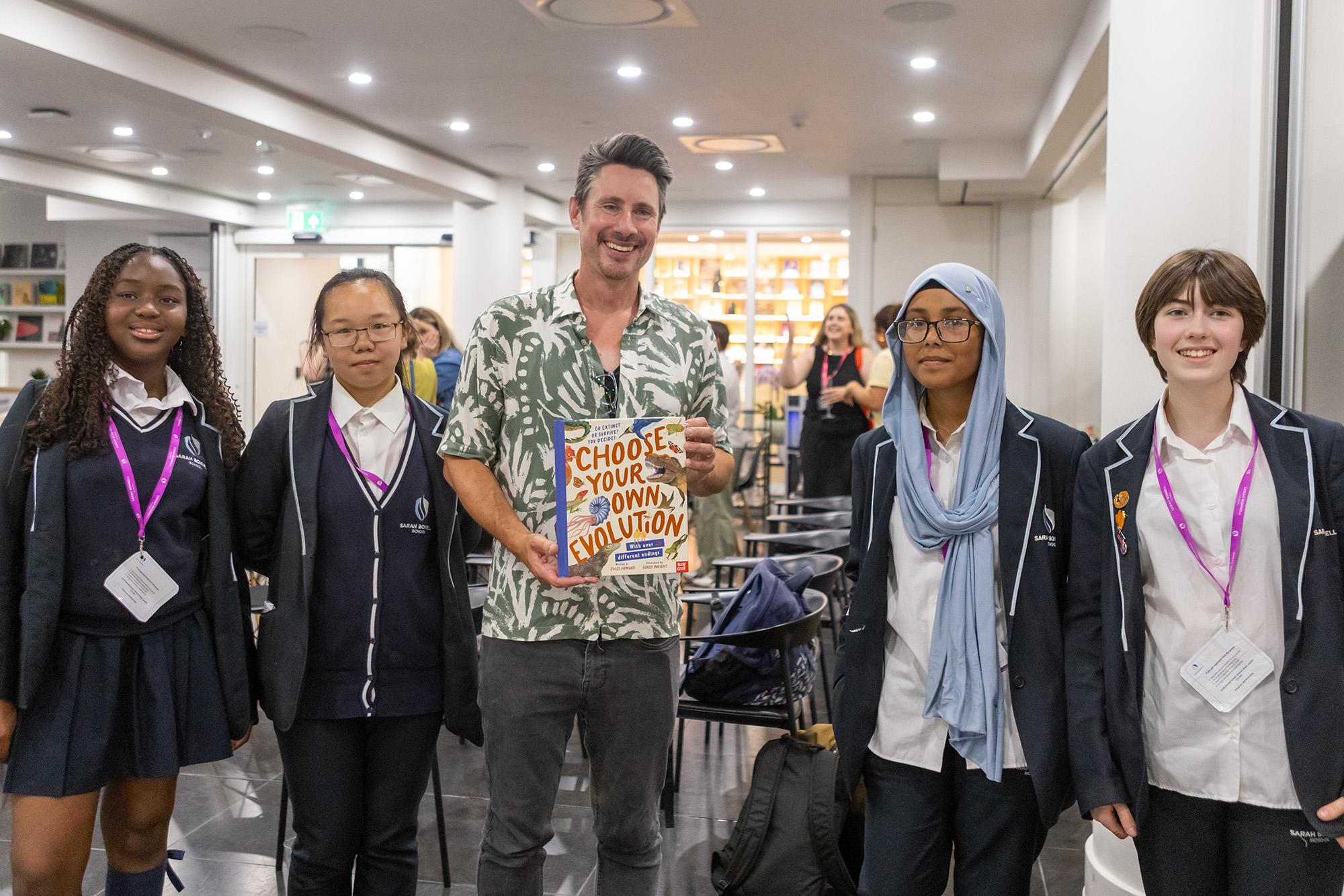
Photos: Harriet Buckingham Photography