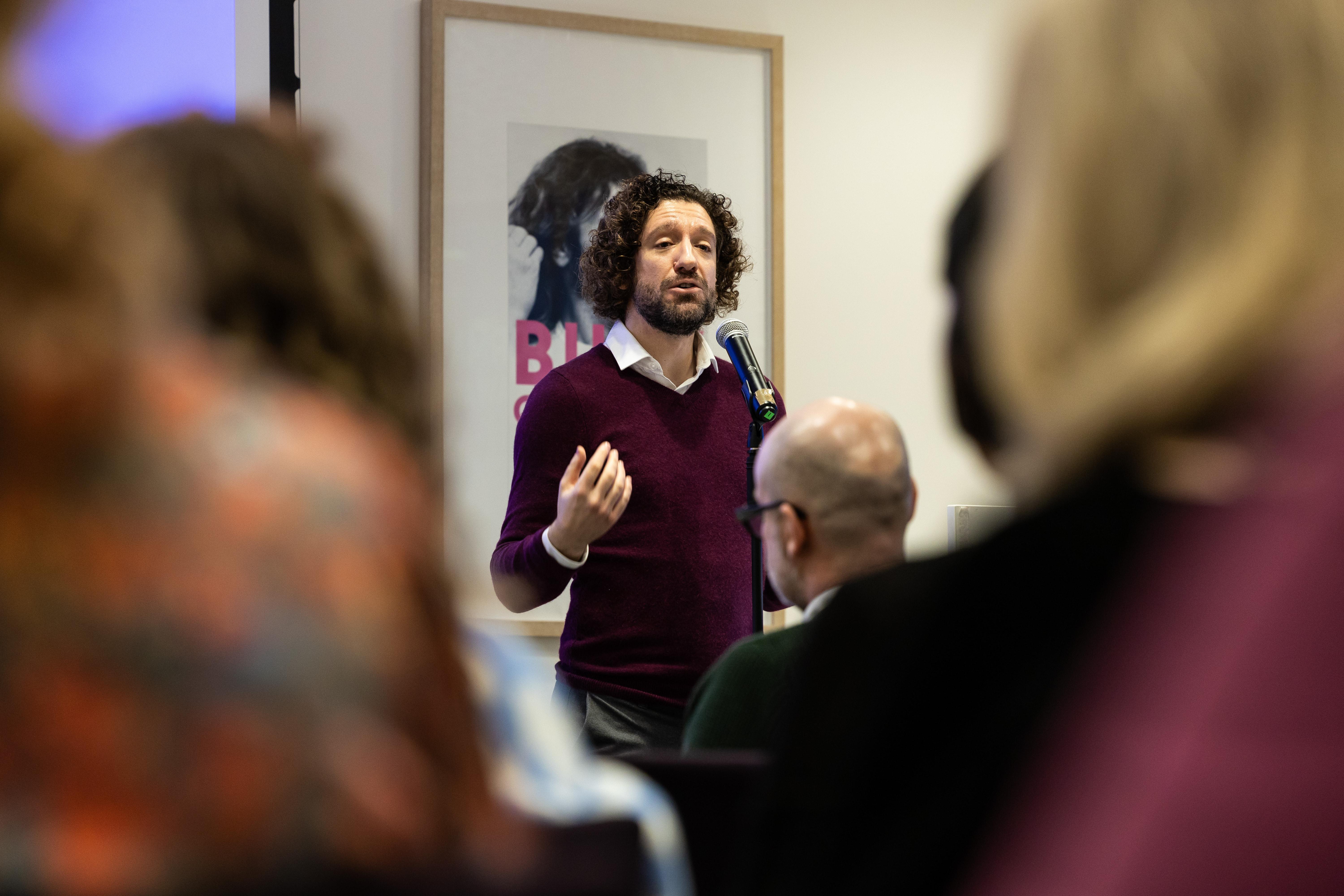
We were privileged to have historian, author and podcaster Greg Jenner host the Information Book Award ceremony last week. Greg gave an entertaining and moving opening address, touching on the history, power and potential of information books. We are really pleased to share Greg's thoughts with you:
Information books are beautifully transformative in how they can introduce subjects that might never have occurred to a child, or, instead, answer questions a young reader has been obsessing over for months. Writing is a form of magic; it’s telepathy with ink – you are sharing your mind with another, and that’s an extraordinary gift.
But, as a historian, I must also remind you that writing is also an ancient technology we can trace back to roughly 5,400 years ago, to the early Bronze Age, with Egyptian hieroglyphs and Mesopotamian cuneiform; and it’s important to remember that writing was first invented for the sharing of information! In fairness, it was fairly dull information, and not nearly as enjoyable as the books we are celebrating today – but it was crucial information all the same: tax records about how many cows someone had bought, or legal documents listing all the pharaohs in order. Things people needed to know.
Sure, ancient storytellers snuck in and grabbed all the limelight with their fancy Gilgameshes and Iliads, but it’s the factual writers who first led the way! And, to be honest, it’s probably the factual writers who will hopefully save us from the new godlike Pharaohs in silicon valley!
I am undoubtedly a historian because I fell in love with the Asterix books as a kid. But when I recently gazed upon my childhood bookshelves – which awkwardly remain ossified in my parents’ house – I realised that, before Asterix, there had been so many information books which had already primed me to care about learning.
I had a charmingly illustrated book about how the human body works, and to this day I’m pretty sure white blood cells have moustaches and wear shiny suits of armour when they fight off diseases. That’s just scientific fact! I also had beautifully illustrated Usborne books about castles and knights, a DK book about Ancient Greece, and a gorgeously blue and gold pamphlet from the Egyptology museum in Cairo, brought home for me by a family friend. It was fairly obvious I liked history, even aged 8.
Intriguingly, however, my most-thumbed tome wasn’t a history book, but a colourful Atlas of the world, filled with hundreds of tiny italic words that represented cities of millions of people. I stared at those maps almost every night, memorising countries, capitals, coastlines, population figures… you know, the kind of stuff that’s guaranteed to get you a girlfriend!
I was, as many children are, a hoarder of knowledge. I stuffed facts into my brain like a squirrel cramming nuts into its winter hidey-hole. I could regale my family with a tsunami of unrequested trivia. Over time, I grew to love the sensation of knowing, but also the joy of sharing my knowledge. And now that is my job.
When I was young, information seemed like a permanent currency that never lost its value. Facts and data were eternal truths, and all one needed to do was memorise everything to be ready for adulthood! Sadly, I’m 43, and I’m still not sure I’m ready for adulthood…
Of course, I now know that knowledge doesn’t stay permanent at all. It constantly evolves. Science keeps churning, astronomers keep finding new moons and downsizing once-loved planets – poor Pluto!, archaeologists keep digging stuff up, historians keep changing their minds about Churchill, journalists keep reporting new news, politicians keep passing new laws, new technologies keep showing up, new diseases keep emerging, and new treatments arrive to combat them, and people’s identities keep growing as they react to the every-changing world around them, or discover new pride in their newfound communities.
Information books are brilliant because they are full of facts and wisdom. But they can also full of “don’t knows”! Increasingly I find myself explaining to children that we will likely change our minds about things… and that’s ok… in fact, it’s better than ok, that’s exciting!
Information books celebrate current states of knowledge, but they also sow the seeds for the next generation to come along and overturn that knowledge. Teaching kids to know things also means teaching them to think for themselves, to be flexible and open-minded, so they can keep up with the constant transitions, or even grow up to be instrumental in shaping those transitions.
So, by putting beautiful books out into the world, and sharing them in schools and libraries, not only are you helping children make sense of their lives – and guiding them to happy, healthy futures – but you’re also perpetuating a legacy that will follow on after you, maintaining a grand tradition sweeping back 5,400 years to the Bronze Age.
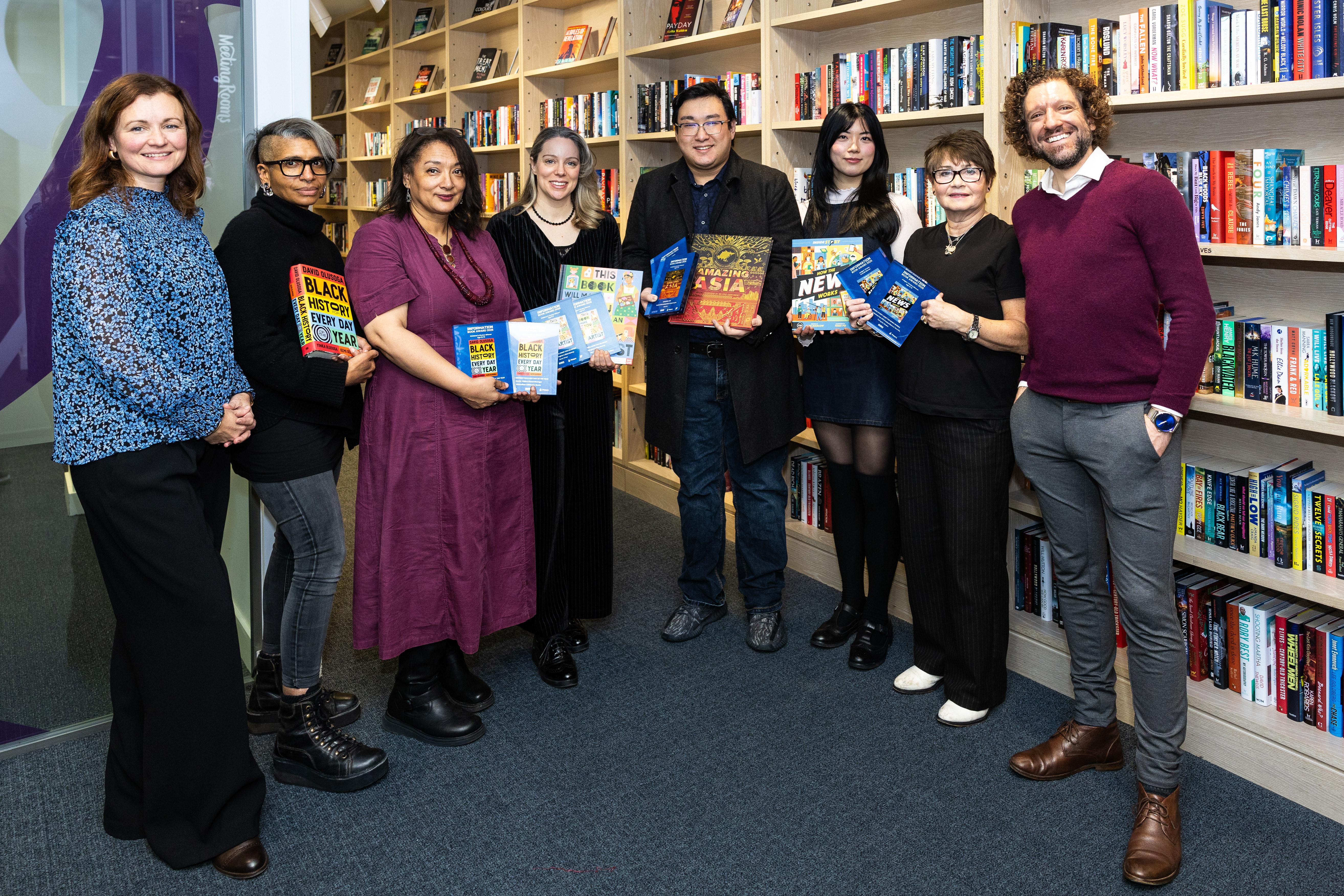
Read more about this year's ceremony and the winners of the Information Book Award.
Photos by Adam Hollingworth